Rhino Linings Spray-On vs. Drop-In Bedliners: Which Is the Right Choice for You?
Drop-in bedliners are generally cheaper than spray-on bedliners. While they offer a quick and straightforward installation process, they offer very little in the way of safeguarding your vehicle. Going the cheaper route may not be the best option if you are looking to extend the longevity of your truck bed and maintain higher resale value.
SCRATCHES
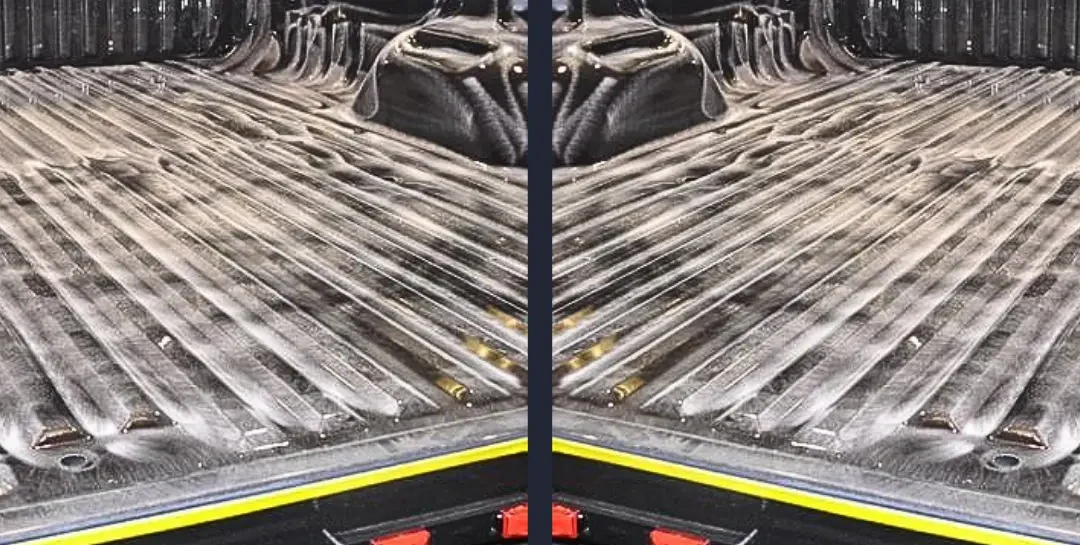
Spray-on bedliners do a better job of protecting your truck bed in the long run from scratches, rust, corrosion, and damage. You don’t have to worry about spray-on bedliners shifting around or debris getting trapped underneath. Spray-on bedliners have no seams or fasteners. Every contour of your truck bed is fully coated and protected.
Drop-in bedliners are more of a one-size-fits-all product that doesn’t necessarily “fit all”. There are not much more than a few screws keeping the drop-in bedliner in place, which can easily become loose and shift around the truck. You risk constant rubbing and shifting that will likely rub off the truck bed paint and cause scuffs and scratches, which lead to corrosion.
RUST PREVENTION
Rhino Linings spray-on bedliners protect against water intrusion. A fully coated truck bed prevents natural elements like rain and snow from reacting with metal or steel. When sprayed properly by a trained professional, your truck bed will not rust and corrode.
With drop-in bedliners, the risk is moisture building up between the drop-in bedliner and your truck bed, which can lead to rust, corrosion, and premature failure. Drop-in bedliners are NOT as secure as spray-on bedliners. Tears, warping, or gaps commonly form in the drop-in bedliner, allowing water to seep in.

SAFETY
In the worst-case scenario, drop-in bedliners are known to fly out of the truck bed while traveling on a street or highway. Loose and unsecured drop-in bedliners hurling down a roadway can contribute to motor vehicle accidents. Even the smallest pieces of broken drop-in bedliners can become projectiles when they fly off of a truck’s bed. The last thing you’d want is a chain reaction of car accidents due to a drop-in bedliner that has malfunctioned and flown off your truck into traffic.
SLIP-RESISTANT
Rhino Linings spray-on bedliners offer grip and prevent loads from sliding around.
Although there may be a benefit to easily sliding your materials or load onto the hard plastic drop-in bedliner, there are still risks that could outweigh the benefits. With drop-in bedliners, you run the risk of slipping and falling while standing in the bed or truck loads shifting around, which can be particularly bad if the surface is wet.

IMPACT RESISTANT
Rhino Linings has a variety of protective coatings, but the bedliner products are formulated to be resistant to impact. You can expect your truck bed will remain the same shape it began just before the spray-on application. Loading equipment, tools, or heavy hauls, spray-in bedliners are the better option for protecting your truck bed.
All drop-in bedliners are not created equally. Quality can vary from one manufacturer to another. Drop-in bedliners are typically a large piece of hard plastic (polyethylene composite) and may lack quality when manufactured. The disadvantage over time is heavy loads and equipment can easily wear down or tear the plastic bedliner. The damage is expensive and difficult to repair. In most cases, you are forced to just replace the drop-in bedliner.
CHEMICAL RESISTANT
The beauty of Rhino Linings spray-on bedliners is that our formulas remain stable in a variety of applications and adhere to almost any surface. While Rhino Linings has countless use cases for its products, spray-on bedliners have been the leading way in protective vehicle coatings for over 35 years. This is due to the development of a customizable, spray-on bedliner designed to endure stress and is chemical resistant. You can expect your Rhino Linings spray-on bedliner to withstand a range of acidic compounds to weak alkali basics.
Rhino Linings has various formulas for bedliners you can choose from depending on your specific needs and uses for your truck. Our products are formulated to be slip-resistant, impact-resistant, chemical-resistant, and scratch-resistant.
Contact your local Rhino Linings Applicator to find the best application that works for you. Rhino Linings offers nationwide coverage for truck bedliners. Read more about the Rhino Linings warranty program here.